Full-service restaurant construction from grease traps to hood systems. Licensed, bonded, and insured general contractor serving Georgia and Florida since 2016.
Tell us about your project and receive an estimate within 48 hours.


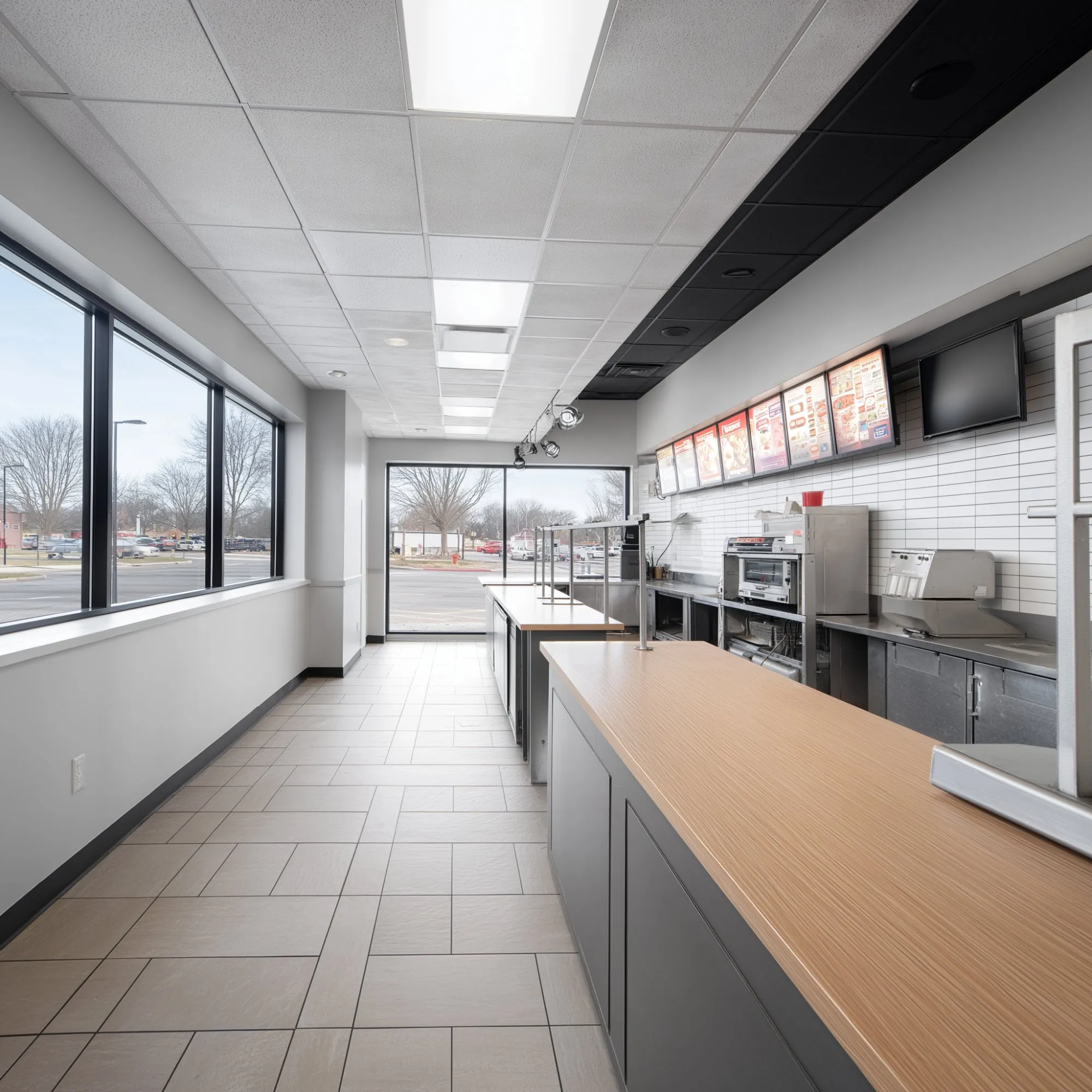
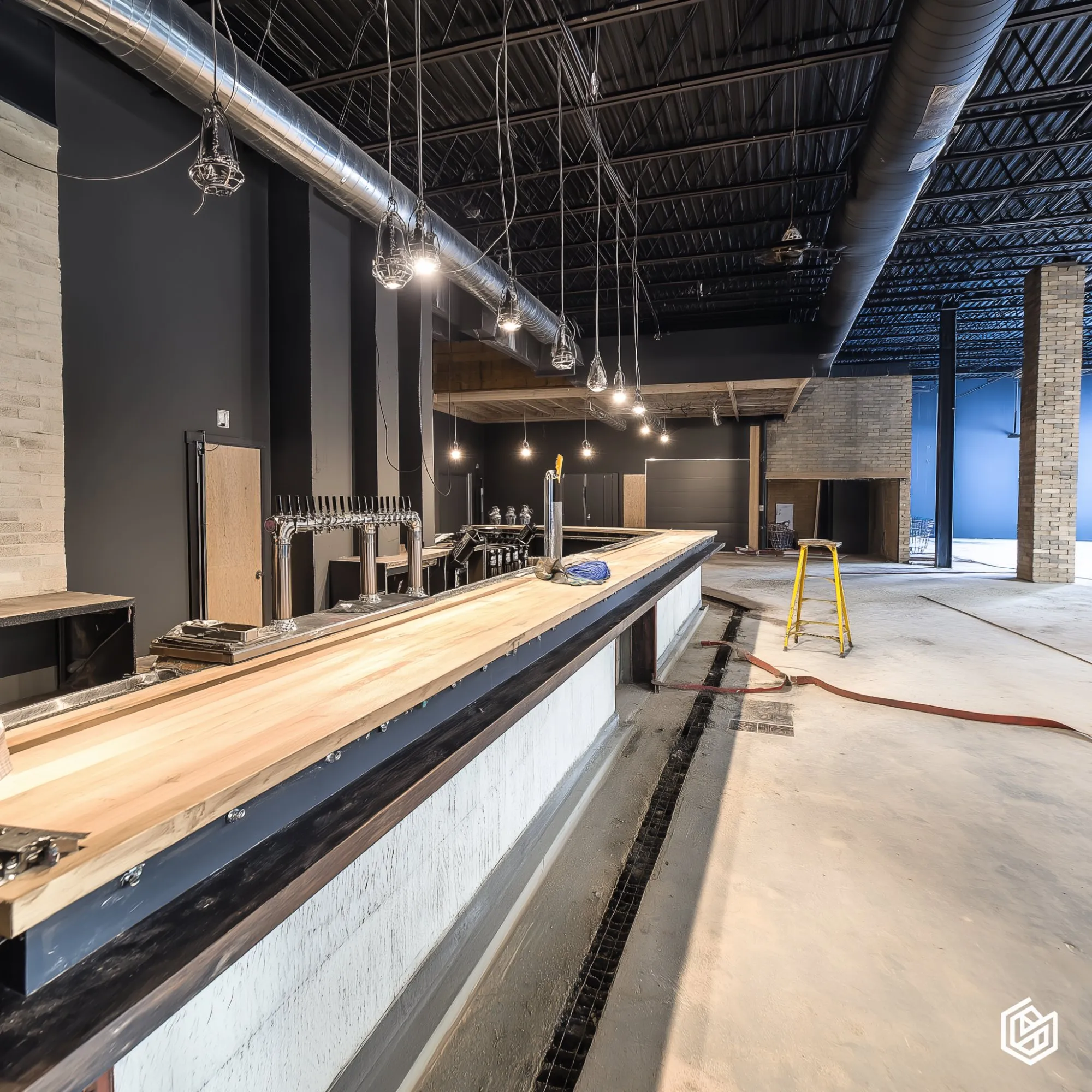

The gap between what a restaurant space looks like and what it actually costs to build out is where first-time owners get crushed. Here's what experienced operators know.
Your hood system must be engineered to the specific BTU output of your cooking equipment. Change the menu concept later and the suppression system may need to be resized — a $15K–$40K problem after the fact.
Every jurisdiction in Georgia and Florida requires a grease interceptor for commercial kitchens. Interior point-of-use units handle small concepts. Full underground interceptors cost $8K–$25K and require civil engineering coordination with the landlord.
Health departments in Georgia and Florida require a three-compartment sink with specific spacing and hot water capacity. This isn't a design choice — it's a pass/fail item on your inspection. We plumb it right the first time.
Commercial kitchens pull massive amperage — walk-in compressors, ovens, fryers, and HVAC all on the same service. If your existing panel doesn't have capacity, you're looking at a service upgrade that adds weeks and tens of thousands in cost.
Walk-in coolers and freezers require dedicated circuits, condensation drains, and floor reinforcement. Placement affects kitchen workflow, delivery access, and mechanical room clearances. Wrong placement means daily operational friction.
In both Georgia and Florida, you need health department plan review before building permits are issued. Kitchen flow, handwash stations, food storage separation, and waste handling all require pre-approval. We submit this early to avoid schedule delays.
"A restaurant that fails its first health inspection doesn't just lose a week. It loses its staff's confidence, its investor's patience, and its opening night."
— Bowser Construction GroupType I and Type II hood systems sized to your cooking line. UL-300 wet chemical fire suppression integrated with the hood. Makeup air units balanced to exhaust CFM to maintain neutral kitchen pressure and keep your dining room comfortable.
Three-compartment sinks, prep sinks, hand-wash stations, and floor drains — all plumbed to code with proper air gaps. Grease interceptor sizing per local jurisdiction requirements. Dishwasher connections with appropriate backflow prevention.
200–800 amp services depending on kitchen size and equipment. Dedicated circuits for each major appliance. Gas piping sized to aggregate BTU demand with proper emergency shut-offs. Emergency and exit lighting per NFPA 101.
Walk-in cooler and freezer construction with insulated panels, vapor barriers, and dedicated refrigeration systems. Remote or self-contained compressors based on space constraints. Reach-in units on dedicated circuits with drain provisions.
Dining room comfort cooling separate from kitchen exhaust systems. Dehumidification in bar and high-humidity areas. Fresh air ventilation per ASHRAE 62.1 for occupancy loads. Kitchen HVAC integrated with hood makeup air for balanced airflow.
Ansul system integration with cooking line. Sprinkler modifications for new partition layouts. Fire alarm device relocation and addressable panel programming. Emergency exit paths compliant with occupancy-based egress calculations.
Restaurant build-outs are among the most expensive per-square-foot commercial projects. Kitchen infrastructure, fire suppression, and health department compliance drive costs higher than standard office or retail.
GA & FL markets. Kitchen equipment (FF&E) often adds 30–40% beyond construction. Call (470) 230-3331 or email info@bowserconstructiongroup.com for a project-specific number.
Your restaurant must pass multiple independent inspections before opening. We coordinate every system to clear every authority having jurisdiction on the first attempt.
Kitchen flow, handwash stations, food storage temperature zones, three-compartment sink placement, and pest prevention measures. Pre-approval plan review submitted before building permit application.
Hood suppression activation test, ansul system certification, fire alarm testing, sprinkler flow test, and exit path compliance. Occupancy load posted per fire code calculation.
Structural, electrical, mechanical, plumbing, and energy code compliance. ADA path-of-travel verification for restrooms, entrances, and service counters. Certificate of Occupancy contingent on all trade sign-offs.
Bar layout and storage areas built to satisfy the physical requirements of your state liquor license application. Locked storage, separate entrances where required, and security provisions per local ordinance.
Share your concept, floor plan, or even a napkin sketch. We'll assess the space, identify infrastructure gaps, and deliver a line-item estimate broken down by every trade — demolition through final health department walkthrough.
Now scheduling restaurant projects in GA & FL.
QSR and fast-casual concepts run $150–$350/SF. Casual dining: $250–$500/SF. Fine dining with premium finishes and complex kitchen infrastructure: $350–$750+/SF. Kitchen equipment (FF&E) adds 30–40% beyond construction costs. Georgia and Florida's Southeast corridor delivers competitive labor rates compared to coastal markets. As a reference point, BCG completed a 3,850 SF restaurant build-out in Alpharetta, GA in 2024, including full commercial kitchen, Type I hood system, and grease interceptor.
QSR in existing shell: 8–12 weeks. Full-service dining with hood, grease interceptor, and bar: 12–16 weeks. Complex builds with outdoor dining and custom millwork: 16–22 weeks. Add 3–6 weeks for health department plan review and building permits — timelines vary by county. Forsyth County and Orange County FL have different review cycles.
Yes. We prepare and submit health department plans as part of the pre-construction process. This includes kitchen layout, handwash station placement, food storage zones, three-compartment sink sizing, and waste handling — all reviewed and approved before building permits are pulled. We handle this across every Georgia and Florida jurisdiction we serve.
Yes. We build restaurants from cold dark shell (no utilities) and warm dark shell (basic utilities, no finishes) conditions. Shell builds require more infrastructure — electrical service entrance, gas service, water and sewer connections, and grease interceptor installation — which increases scope and cost compared to second-generation restaurant spaces.
A second-generation restaurant space already has hood infrastructure, grease interceptor, gas service, and floor drains in place. This can save $50K–$150K+ depending on what's reusable. We assess existing systems during our pre-lease walkthrough and identify exactly what can be retained vs. what needs replacement — so your budget reflects reality, not assumptions.
Yes. We coordinate with your equipment vendor to sequence installation with rough mechanical work. Gas connections, electrical circuits, drain provisions, and ventilation ductwork are all engineered to match your specific equipment schedule. Equipment arrives after rough-in and before final inspections — not the other way around.
Licensed general contractor serving Metro Atlanta and North Georgia.
Licensed general contractor serving Central Florida and Greater Orlando.